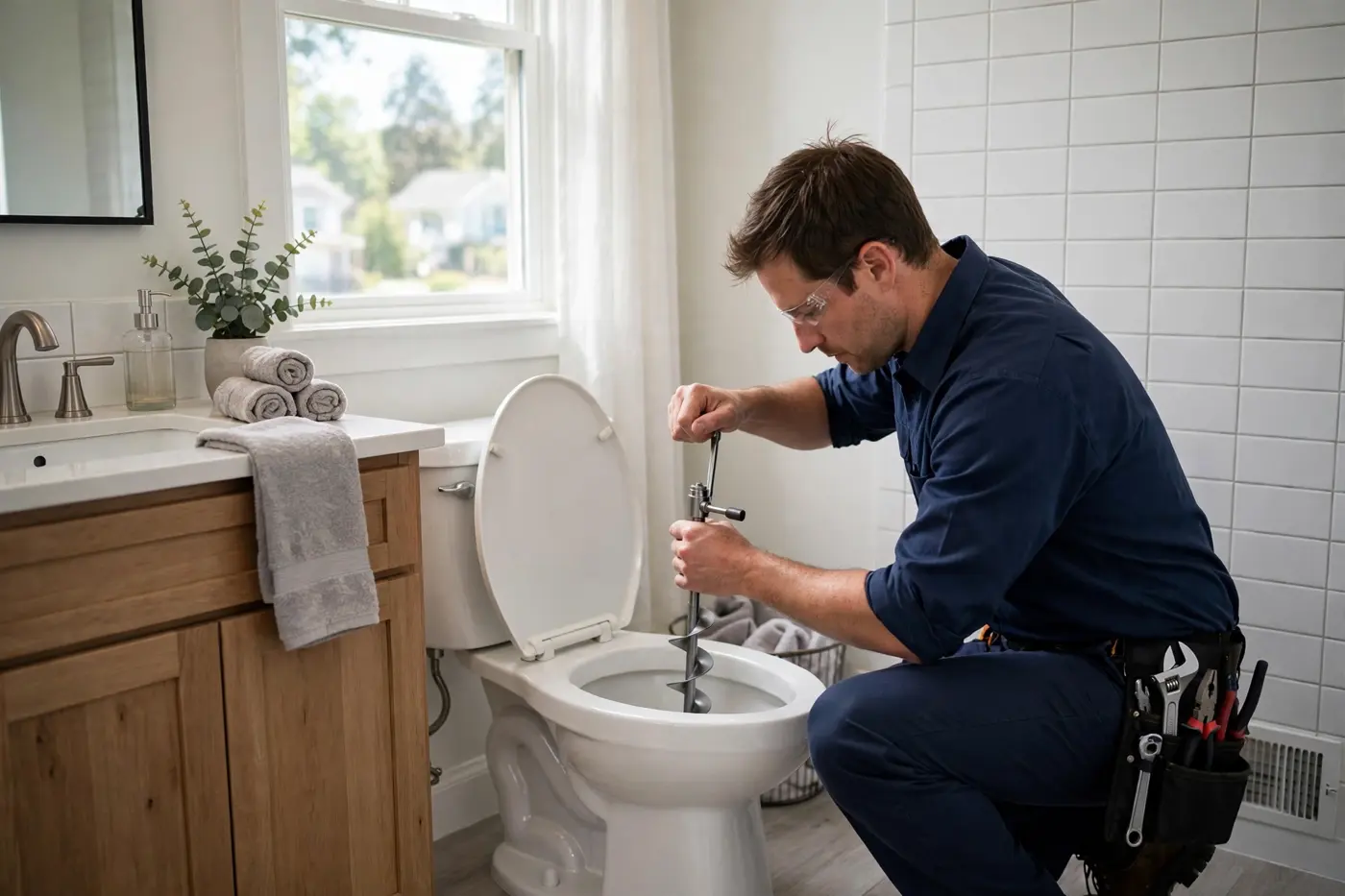
Clogged Toilet Repair in Fountain Valley, CA
📞 Call Now — (714) 410-0362A clogged toilet is cleared by finding where the blockage sits — bowl, trapway, or drain line — and clearing that full path, then testing the flush until it drains clean.
What a clogged toilet is telling you
Most clogs start simple: too much paper, a flush that was too weak to push waste through, or something that never belonged in the bowl. The pattern of the clog tells a technician a lot before any tool comes out, so it helps to notice what your toilet is doing.
A healthy toilet takes everything down in one strong swirl. When the bowl fills up and drains slowly, spins without dropping, or gurgles as it empties, something is blocking the path. Sometimes the blockage sits right in the bowl outlet. Sometimes it sits deeper, in the curved trapway built into the porcelain, or in the drain line under the floor.
Watch for these signs in your Fountain Valley home:
- Water rises high in the bowl, then drains down very slowly
- The flush swirls but waste stays behind or comes back up
- Gurgling sounds from the bowl, tub, or sink during a flush
- One toilet clogs again and again while others in the home work fine
- Water seeps at the base of the toilet after a hard flush
- A weak, lazy flush that never quite clears the bowl
Each sign points to a different spot. A bowl that fills and slowly empties usually has a partial blockage that lets water slip past. A bowl that will not drop at all has a full blockage. Gurgling in nearby fixtures means air is being pushed through the shared drain line, which points deeper than the toilet itself.
Kids are a common cause, and there is no shame in it. Small toys, wipes, cotton swabs, and dental floss all get flushed in busy homes. Wipes are a big one: even the ones sold as flush-friendly do not break down like toilet paper, and they snag inside older pipe. Paper towels and tissues cause the same trouble because they are made to hold together when wet.
A weak flush can also fake a clog. If the water level in the tank is low, or the rim jets under the bowl rim are clogged with mineral scale, the flush may not have enough push to clear normal waste. In that case the toilet is not blocked at all — it is underpowered. A technician checks flush strength first, because clearing a drain will not fix a toilet that cannot flush with force.
If water is rising toward the rim right now, do not flush again. Turn the shut-off valve behind the toilet clockwise, or lift the tank lid and press the flapper down to stop more water entering the bowl. That one move prevents most overflow messes while you make a call.
From blocked bowl to a clean, full flush
The goal is not just getting the water down once. The goal is a toilet that takes a full load of paper down, refill after refill, with no slow swirl and no second flush.
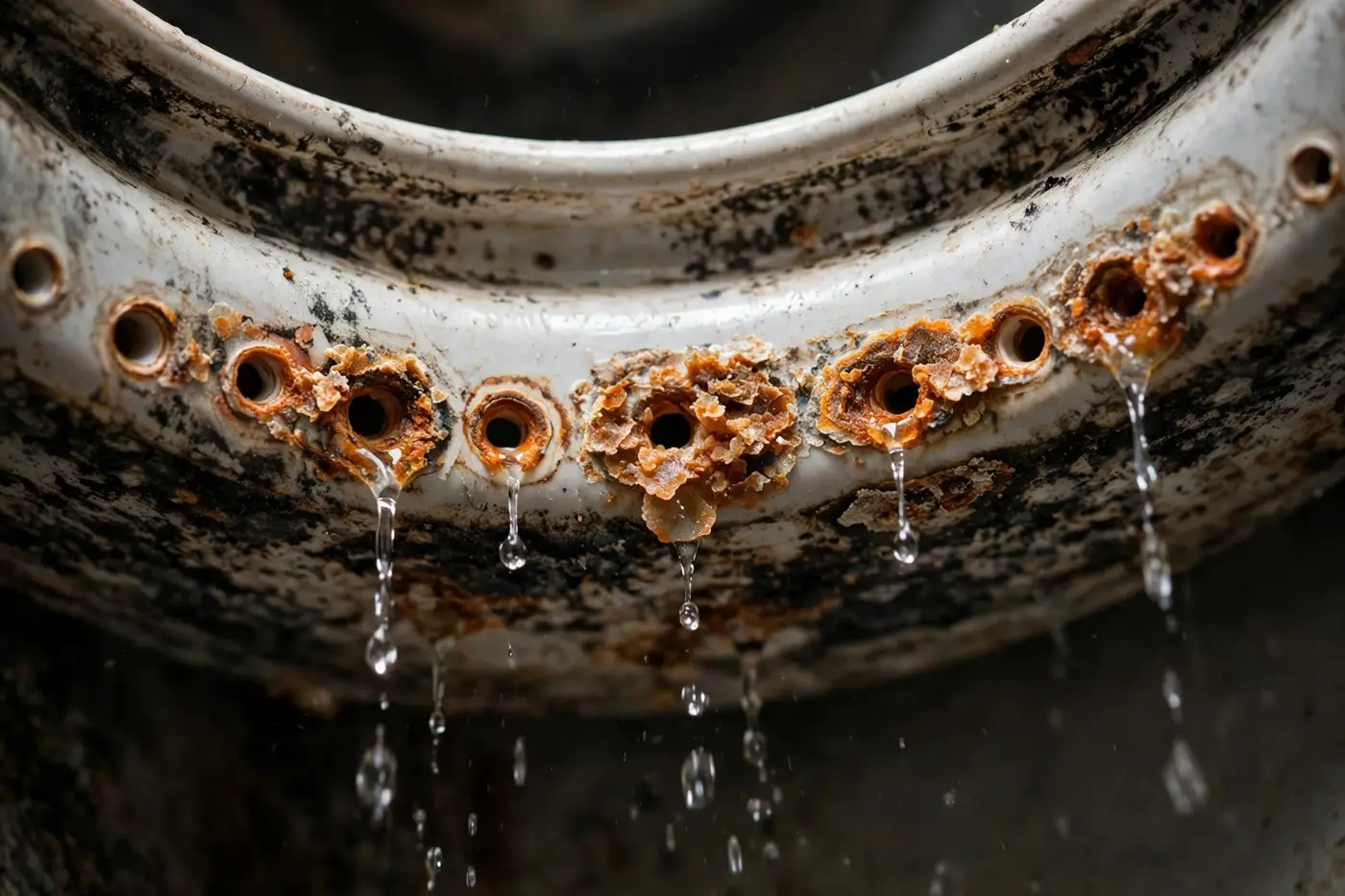
Water sits high and drains in a slow, weak swirl. Paper stays behind, the bowl needs a second flush, and each flush feels weaker than the last. Mineral scale in the rim jets and a partial blockage in the trapway are choking the flow.
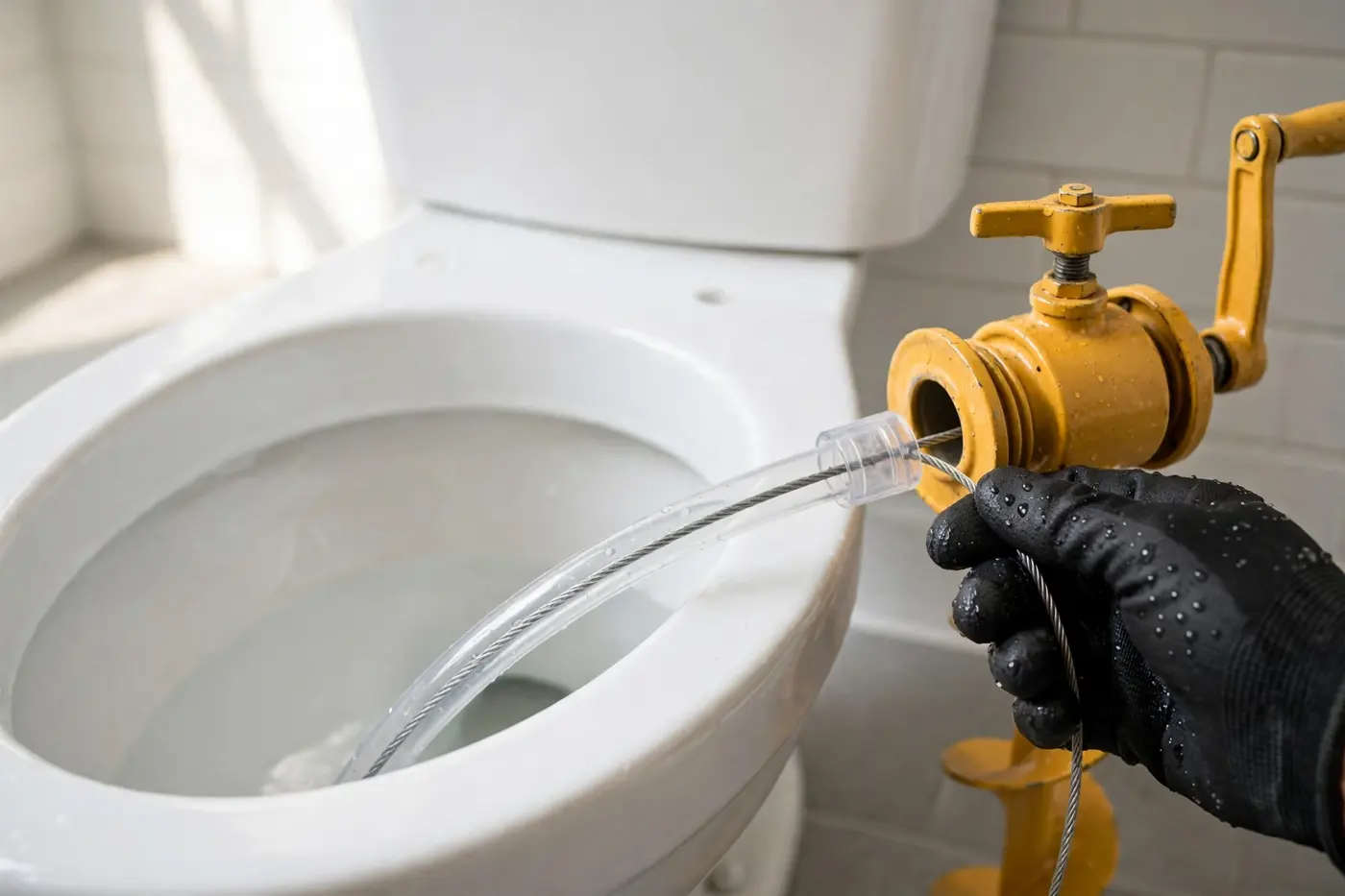
The blockage is cleared through the full trapway with a closet auger, the rim jets are checked, and the toilet is test-flushed with paper several times in a row. The bowl empties in one strong swirl and refills to the right level, ready for normal use.
That test at the end matters. A clog that clears once but leaves half the blockage behind will be back within days. A proper visit ends with repeat test flushes, a check of the water level in the tank, and a look at the base and supply line to make sure the hard flushing did not open up a leak.
How a clogged toilet repair visit works
One call connects you with a local toilet specialist. Here is what happens on the visit, step by step, so there are no surprises.
Step 1 — The call and the first questions
You call (714) 410-0362 during open hours and describe what the toilet is doing: rising water, slow drain, gurgling, or a full block. You will be asked which bathroom it is, whether other drains are slow, and whether anything unusual was flushed. Those answers help the technician bring the right tools the first time.
Step 2 — Water control and a first look
On arrival, the technician checks the bowl and tank water levels and the shut-off valve behind the toilet. If water is still high, it is lowered safely before any clearing starts, so the work area stays dry and the floor stays protected.
Step 3 — Finding where the blockage sits
The technician test-flushes and watches how the water moves. A slow, swirling drain points one way; a bowl that will not drop at all points another. Flush strength from the tank is checked too, so a weak flush is not mistaken for a drain blockage. The scope of the clearing work is confirmed with you before any work starts.
Step 4 — Clearing the blockage
Most bowl and trapway clogs are cleared with a closet auger, a tool made for toilets that feeds through the trapway without scratching the porcelain. If the blockage sits deeper, the technician works the drain line through the toilet outlet and explains each step as it happens. Any object found in the trapway is shown to you, so you know exactly what caused the clog.
Step 5 — Checking the parts that feed the flush
With the drain clear, the tank parts get a quick check: water level, flapper seal, and the rim jets that give the flush its push. In Fountain Valley, hard water leaves mineral scale that slowly weakens those jets, and a small fix here can stop a weak flush from turning into the next clog.
Step 6 — Test flushes and a leak check
The visit ends with several test flushes using a normal amount of toilet paper. The technician watches the bowl empty fully each time, checks that the tank refills and shuts off at the right level, and wipes the base and supply connections dry to confirm nothing leaks under pressure.
Safe checks you can do — and where to stop
A few simple checks are safe for any homeowner. Past that point, the wrong tool or too much force can crack porcelain or push a blockage deeper, so knowing the stop point matters as much as the checks.
Checks that are safe to try
- Stop the water: turn the valve behind the toilet clockwise, or hold the flapper down inside the tank
- Try a flange plunger — the type with a cup that folds out — with a firm seal over the bowl outlet and steady pushes
- Check the tank water level: it should sit about an inch below the top of the overflow tube
- Look for anything visible at the bowl outlet, like a toy or a wad of wipes, that you can reach by hand with gloves
- Wait an hour on a paper-only clog; softened paper sometimes passes on its own
Use a plunger made for toilets, not a flat sink plunger. The folded cup seals the curved outlet of a toilet bowl, and that seal is what makes the push work. Short, steady strokes move more water than wild plunging, and wild plunging mostly makes a mess.
Where to stop and call
- The plunger makes no change after a few solid tries
- Water comes up in a tub or shower when you flush
- More than one drain in the home is slow at the same time
- The clog keeps coming back in the same toilet, week after week
- You suspect a hard object — a toy, a phone, a brush — is in the trapway
- Water is leaking at the base of the toilet when you flush
Skip drain chemicals entirely. They rarely clear a toilet clog, they can damage the porcelain finish and the parts inside the tank, and they leave harsh liquid sitting in the bowl for the next person who has to work on it. A closet auger in trained hands clears what chemicals cannot, without the risk.
One-toilet homes: if this is the only toilet in the home and it is fully blocked, treat it as urgent within open hours. Call (714) 410-0362, keep the water off at the valve, and do not keep flushing to test it.
Home remedies people ask about — what actually helps
Three remedies come up on almost every clogged toilet call: baking soda and vinegar, dish soap, and simply waiting. Each one has a narrow window where it can help a light clog — and a clear point where it stops helping. Here is the honest version of each.
Baking soda and vinegar: mostly soaking, not unclogging
The fizz looks powerful, but fizzing is not pressure, and pressure is what moves a clog. What the mixture really does is soak the blockage. On a fresh, light clog made of paper, an hour of soaking can soften the edges enough that a gentle plunge finishes the job, and the mixture will not harm porcelain. It will not shift packed solid waste or any solid object, no matter how long it sits. One firm rule: never combine baking soda and vinegar with a chemical drain cleaner, and never use one right after the other — mixed chemicals in a bowl are a hazard, not a stronger remedy.
Dish soap and warm water: the one that earns its place
A small squirt of ordinary dish soap, followed by a bucket of warm water poured steadily from about waist height, is the home remedy technicians object to least. The soap lubricates the trapway, the warm water softens paper, and the weight of the water adds gentle pressure. Give it 20 to 30 minutes to work, then try a slow, steady plunge. Warm is the key word: never boiling. Boiling water poured into a cold porcelain bowl can crack the porcelain, and the heat can soften the wax ring that seals the toilet to the floor — turning a clog into a leak.
Waiting it out: works on paper, only on paper
A clog made mostly of paper and water can genuinely soften and pass on its own over a few hours, which is why the advice to wait exists at all. But waiting does nothing for solid waste packed tight or for any object in the trapway, and the wait only counts if nobody flushes. Every test flush risks an overflow and stresses the wax seal at the base. If the water level has not dropped at all in an hour, the clog is telling you it is not the softening kind.
Bubbling while it struggles: read the message
If the bowl bubbles or gurgles as it tries to drain, air is being pushed back through the bowl water instead of escaping up the vent pipe. That means water rushing toward a partial blockage has nowhere to go. A single bubbling toilet, with every other drain in the home running normally, usually points to a partial clog close by. Bubbling together with a slow tub or shower points deeper — to the shared line or the vent — and that is a stop point, not a plunging problem. Our gurgling noises guide explains the vent side of this in full.
Why repeat clogs in Fountain Valley often point past the bowl
Many Fountain Valley homes were built in the 1960s and 1970s, and a large share of them still drain through cast-iron lines from that era. That age shows up in how clogs behave.
Cast iron was a strong pipe when it was new. Over decades, though, the inside wall of the pipe roughens and rusts. That rough inner surface grabs at paper and waste as they pass. In a smooth newer line, the same load would slide through. In an older cast-iron line, material catches, slows, and starts to stack up at the rough spots — often at joints, bends, and the spot where the toilet branch meets the main line.
This is why a toilet in an older Fountain Valley tract home can clog, get cleared, and clog again a few weeks later. Each clearing punches a hole through the buildup but leaves the rough walls and the edges of the buildup in place. The next heavy load catches on the same spot. A plunger can hide this pattern for months because it moves just enough material to get water moving again.
A technician who works on toilets every day reads that pattern. When a clog returns in the same bathroom, the check moves past the bowl: How far down does the auger meet resistance? Does the line drain freely after clearing, or does the water still hesitate? Do the tub and sink in the same bathroom drain at full speed? Those answers separate a simple bowl clog from a line that is slowly narrowing.
There is a second local factor: water. Fountain Valley water is hard, and mineral scale builds up inside rim jets and siphon jets over the years. As those jets narrow, each flush delivers less push. A toilet with a weak flush sends waste into the drain line at low speed, and slow waste is far more likely to stall in a rough cast-iron line. Clearing the line without fixing the weak flush treats only half the problem, which is why a good visit checks both.
If your home is one of the older tracts near Mile Square Park or along the Brookhurst corridor, and one bathroom clogs far more than the others, that history is worth telling on the call. It helps the technician plan for a deeper check of that branch line instead of a quick bowl clearing that will not hold.
Plunger vs closet auger: what each tool can and cannot do
Flange Plunger
- Moves water pressure back and forth to shift a soft blockage
- Works well on fresh paper clogs near the bowl outlet
- Safe for any homeowner to try with a good seal
- Cannot reach deep into the trapway or the drain line
- Cannot remove a hard object stuck in the trap
- Often only opens a small hole in a heavy buildup
Closet Auger
- Feeds a cable through the full curve of the trapway
- Breaks up or pulls back blockages the plunger cannot reach
- Can retrieve small objects caught in the trap
- Has a protective sleeve so the porcelain is not scratched
- Confirms whether resistance sits in the toilet or past it
- Needs a trained hand to avoid pushing a clog deeper
Neither tool is wrong — they work on different parts of the problem. Try the plunger first on a fresh, simple clog. If it does not clear, or the clog keeps returning, the auger is the tool that actually reaches the blockage. If you are also seeing water at the base when you flush, read about toilet leak repair as well, because a base leak is a seal problem, not a clog problem.
When the blockage is the drain or sewer line, not the toilet
A toilet that clogs once is usually a bowl or trapway problem. A home where the toilet, the tub and a floor drain all back up together is telling a different story: the blockage sits further down, in the main drain or the sewer line that carries everything out to the street. That deeper pattern is what sits behind most searches for sewer line repair in Fountain Valley, and it needs a different fix than a closet auger.
The warning signs that the problem has moved past the toilet:
- More than one fixture draining slowly, or backing up at the same time
- Gurgling from a toilet when the tub, sink or washing machine drains
- A sewer smell near floor drains or around the base of the toilet
- Water rising in a shower or tub when the toilet is flushed
- The same clog returning within days of a proper clearing
On a call like this, the first job is confirming where the stoppage actually sits — toilet trapway, branch drain or main line — because each one has a different fix. A main-line blockage is cleared from a cleanout. If the pipe itself turns out to be damaged, the sewer line repair is scoped and priced on site after inspection, before any work starts, so you know what the job involves before you agree to it.
Our full guide to sewer backup in the toilet covers the causes and the first steps in detail. If only one toilet is affected and everything else in the home drains fine, work through the clogged toilet checks on this page first. If several fixtures are involved, say so when you call — it changes what the specialist brings. And if water is already coming up, start with our guide to what to do when a toilet starts overflowing.
Other toilet problems we connect you with help for
Clogs often travel with other faults. These pages explain the connected services, and our areas we serve page lists every Fountain Valley neighborhood covered.
Flange Repair
A broken or low flange lets the toilet rock and can make clogs worse by misaligning the outlet.
See flange repair →Wax Ring Replacement
Water at the base after flushing points to the seal under the toilet, not the drain.
See wax ring replacement →Emergency Toilet Repair
Overflow, rising water, or the only toilet in the home blocked — what to do first.
See urgent repair →Guide: Fix It Yourself or Call?
A plain walk-through of which clogs a homeowner can clear and which ones need a technician.
Read the guide →Guide: Won't Flush, but Not Clogged?
When the bowl drains fine but the flush is weak or missing, the cause usually sits inside the tank.
Read the guide →Clogged toilet questions, answered plainly
Why does my clogged toilet keep coming back in the same bathroom?
A clogged toilet that returns in the same bathroom usually means the blockage sits past the bowl, in the trapway or the drain line beyond it. Paper and waste can catch on rough spots inside older pipe and build up again after each partial clearing. A technician checks how far down the blockage sits and clears the full path, then test-flushes several times to confirm the line drains clean before the visit ends.
Can a clogged toilet clear on its own if I wait?
A light clogged toilet caused by paper alone can sometimes soften and pass after a wait, but a clogged toilet that holds solid waste or foreign objects will not clear safely on its own. Flushing again to test it can overflow the bowl. If the water level does not drop within an hour, stop flushing and call during open hours so the blockage can be cleared with the right tool.
What should I do first when I find a clogged toilet?
With any clogged toilet, do not flush a second time. If the water is rising, lift the tank lid and push the flapper down, or turn the shut-off valve behind the toilet clockwise until the flow stops. Keep towels handy for any spill, and keep the bathroom door closed if young children or pets are nearby. Then call during open hours and describe what the water is doing.
Is a clogged toilet in one bathroom a sign of a bigger drain problem?
A clogged toilet in a single bathroom, with other drains working fine, usually points to a local blockage in that toilet or its short branch line. If tubs or sinks in the same home also drain slowly or gurgle, the problem may sit deeper in the shared line. A technician checks the nearby drains during the visit so the clogged toilet is treated at the right level, not just at the bowl.
What does a technician check during a clogged toilet visit?
During a clogged toilet visit, the technician checks the water level and flush strength first, then works out whether the blockage sits in the bowl, the trapway, or the drain line. The scope of the clearing work is confirmed with you before any work starts. After clearing, the technician test-flushes with paper several times and checks the base and supply line for leaks before finishing.
How long does a clogged toilet visit usually take?
The length of a clogged toilet visit depends on where the blockage sits. A clog in the bowl or trapway is usually cleared and tested within a single visit, while a blockage deeper in an older drain line can take longer to reach and confirm clear. The technician will explain what was found and what was checked before the work is done, so you know the toilet was tested properly.
Will baking soda and vinegar unclog a toilet?
The mixture fizzes, but fizzing is not pressure, and pressure is what moves a clog. On a fresh, light paper clog, an hour of soaking after baking soda and vinegar can soften the edges enough for a gentle plunge to finish the job, and the mixture will not harm porcelain. It will not move tightly packed solid waste or any solid object. Never combine it with a chemical drain cleaner or use one right after the other, and if the water level has not dropped after an hour, stop there and call during open hours.
Does dish soap help unclog a toilet?
A small squirt of ordinary dish soap followed by a bucket of warm — never boiling — water poured from waist height can help a light clog slide: the soap lubricates the trapway and the warm water softens paper. Give it 20 to 30 minutes, then try a gentle plunge. Boiling water is a real risk rather than a shortcut: the sudden heat can crack porcelain and can soften the wax ring that seals the base of the toilet to the floor.
Why does my clogged toilet bubble when it tries to drain?
Bubbles mean air is being pushed back through the bowl water instead of escaping up the vent pipe, which happens when water rushing toward a partial blockage has nowhere to go. A single bubbling toilet with every other drain running normally usually points to a partial clog nearby. Bubbling together with slow tubs or showers points deeper, to the shared drain line or the vent — that is a stop point, not a plunging problem.
Are chemical drain cleaners safe to use in a toilet?
Chemical drain cleaners are a poor match for toilets. They rarely reach or clear a toilet clog, because the bowl holds a large volume of water that dilutes them. The heat and chemicals can damage the porcelain glaze and the rubber parts inside the tank, and the liquid left sitting in the bowl is a hazard for whoever clears the clog next. A plunger or a closet auger clears mechanically, with no chemical risk to the fixture.
Who is responsible for a clogged toilet in a rental — the tenant or the landlord?
This is general information, not legal advice. In most rentals, a clog caused by something flushed that should not have been — wipes, hygiene items or objects — is usually treated as the tenant's side of the line, while clogs caused by worn parts, roots or an aging drain line are usually the property owner's. The lease and local rules decide the exact split. Either way, the practical step is the same: stop flushing, protect the floor, and tell the landlord or property manager promptly before using tools beyond a plunger, so the repair is documented.
Is a clogged drain the same problem as a clogged toilet?
Not quite. A clogged toilet usually means the blockage sits in the bowl, the trapway or the short drain branch for that one bathroom. A clogged drain further down the line behaves differently: several fixtures slow down or back up together, because they all share the same pipe out. If only the toilet misbehaves, it is a toilet job. If tubs and sinks join in, the blockage sits deeper and gets checked as a drain or sewer line problem.
What are the signs the blockage is in the sewer line, not the toilet?
The clearest signs are several fixtures backing up at the same time, gurgling sounds from a toilet when other fixtures drain, sewer smells near floor drains, water rising in a tub or shower when the toilet flushes, and a clog that returns within days of being cleared properly. A single toilet clogging on its own is rarely the sewer line — that pattern almost always points to the bowl, trapway or that bathroom’s branch drain.
Toilet still blocked? Get it cleared and tested properly.
Call during open hours — Mon–Fri 7:00 AM–10:00 PM, Sat 8:00 AM–10:00 PM, Sun 7:00 AM–9:00 PM — and one call connects you with a local toilet specialist in Fountain Valley.
📞 Call Now — (714) 410-0362 Prefer email? info@toiletrepairfountainvalleyca.com