TL;DR
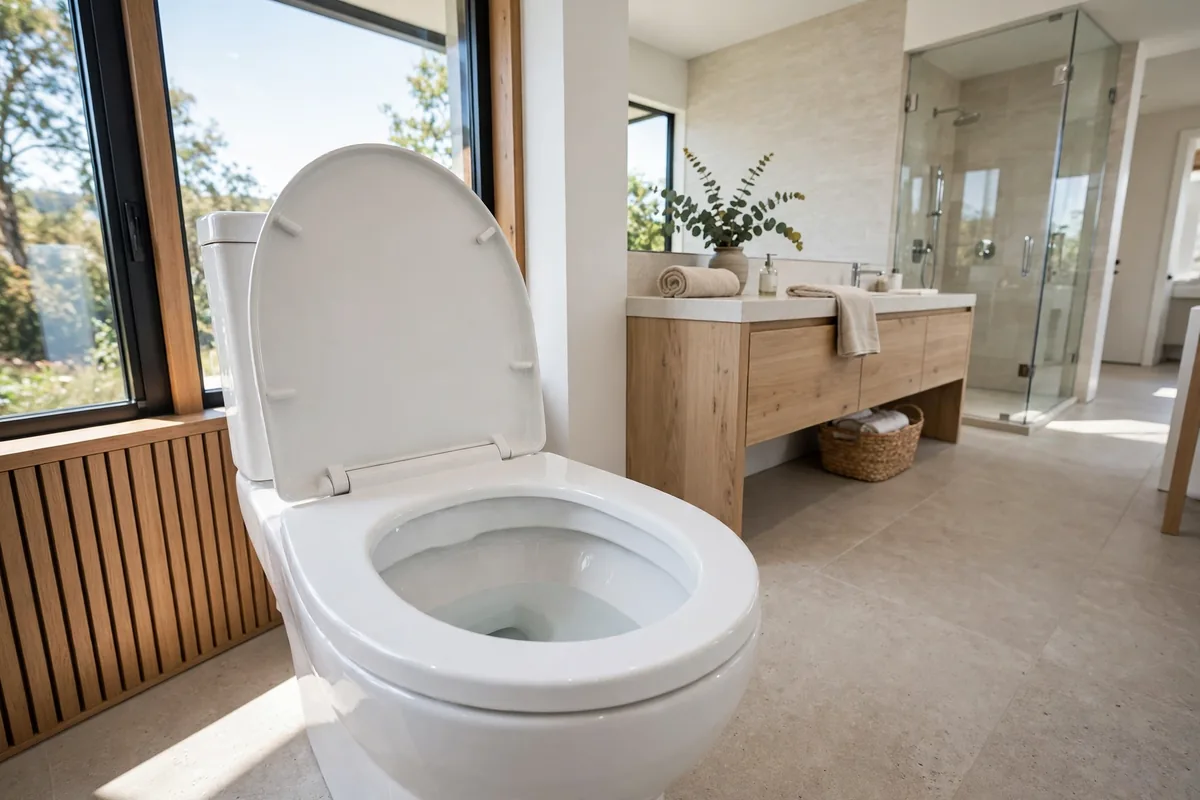
Problem: The water in your toilet bowl sits lower than it used to — the bowl looks half-empty, flushes have gone weak, and you may be noticing smells.
Solution: First separate bowl water from tank water — they are different systems with different causes. Then note the timing: a bowl that is low right after flushing points to the refill; a bowl that drops slowly over hours points to the trapway, the vent, or evaporation. Each pattern has its own fix.
When to call: If the level drops on its own after being topped up, or smells arrive with it. Call (714) 410-0362 during open hours.
In this guide
- Bowl water and tank water are different systems
- Read the timing before touching anything
- Pattern one: the bowl starts low after every flush
- Pattern two: the bowl drops slowly afterwards
- Three checks that separate the causes
- Adjustments that mask the symptom (and why to avoid them)
- When it stops being a home check
- What happens on a visit for a low bowl
Bowl water and tank water are different systems
Most toilet problems live in the tank, and most guides — including several of ours — are about the machinery in there. The bowl is different. The water standing in the bowl is not stored water waiting to be used; it is the top of the trapway, the S-shaped passage cast into the porcelain that holds a plug of water between your bathroom and the sewer. That plug is the trap seal, and it is the only thing keeping sewer gas out of the room.
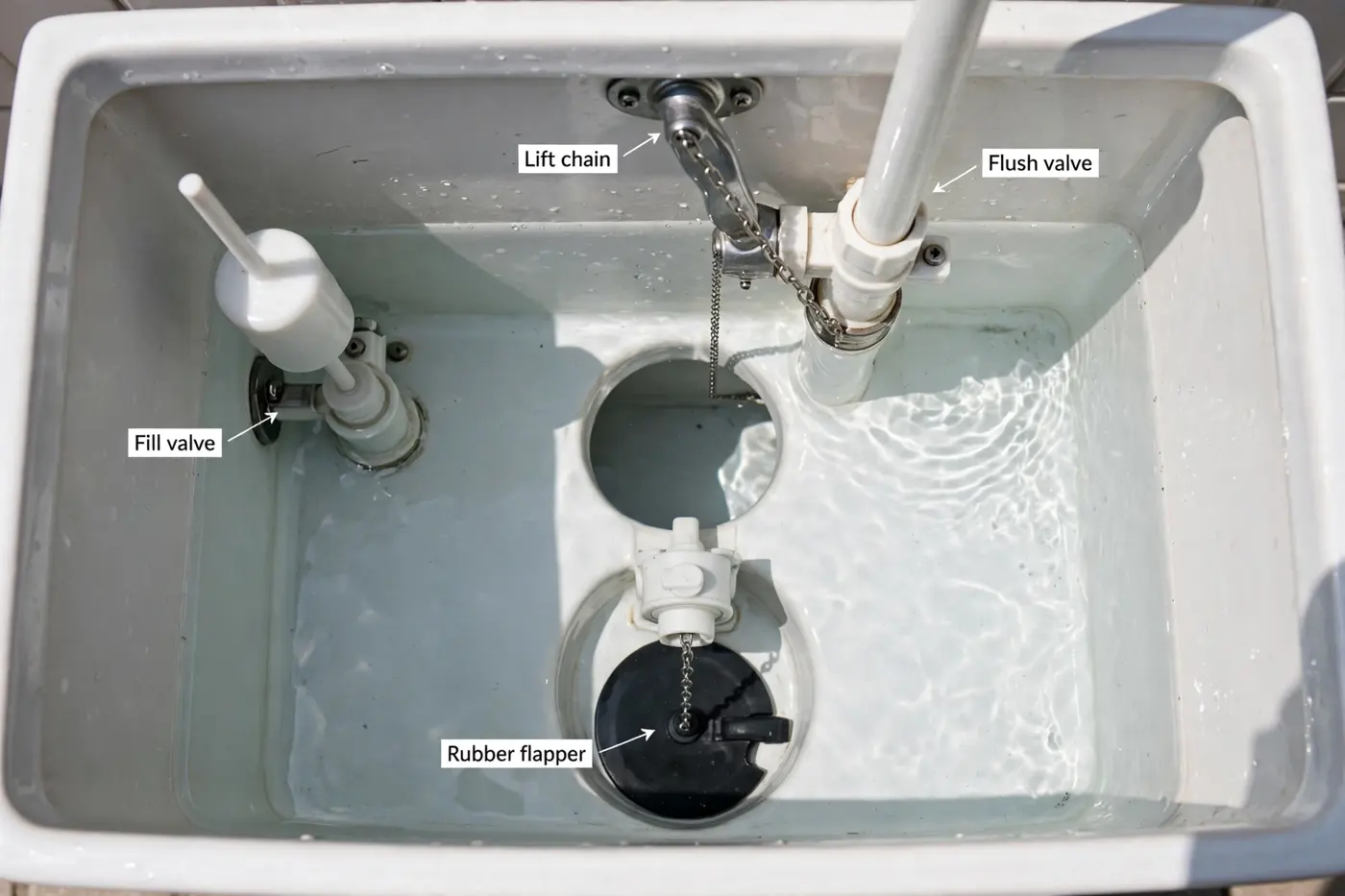
The bowl reaches its proper level at the end of each flush, when the fill valve sends a portion of its refill water down through the refill tube into the overflow pipe, and from there through small holes under the rim — the rim jets — into the bowl. Anything that interrupts that short journey, or anything that lets the trapway's water escape afterwards, shows up as a low bowl. A toilet can have a perfect tank, filling to the line and flushing hard, and still keep a low bowl — which is why our tank won't fill guide and this one describe different problems that are easy to confuse.
Read the timing before touching anything
The single most useful observation costs nothing: when is the level low?
- Low immediately after a flush, and stable after that — the bowl never got refilled properly. The fault is in the refill path: tube, jets, or tank level.
- Normal right after a flush, lower hours later — the bowl was filled and then lost water. The fault is at the trapway, the vent, or simple evaporation in an unused bathroom.
- Low only sometimes, often after other water use in the house — something is siphoning the trap, which points at venting or a partial blockage downstream.
Mark the level with a pencil on the inside of the bowl, flush once, let the refill finish, and check again in an hour and in the morning. That small record turns a vague "the bowl looks low" into a pattern a technician can act on — and it keeps you from adjusting parts that were never the problem.
Pattern one: the bowl starts low after every flush
The refill tube has come off or cracked. The small tube that runs from the fill valve to the overflow pipe is what tops the bowl up. If it has popped off its clip, split, or been pushed down inside the overflow pipe (where it can siphon instead of fill), the bowl gets little or no refill and starts every cycle low. This is the first thing to look for, and the most satisfying: it is visible at a glance with the tank lid off, and refitting it costs nothing.
The tank level is too low. The refill runs for as long as the fill valve runs. A float set low ends the cycle early — the tank holds less, the flush is shorter, and the bowl refill is cut off before the bowl reaches its level. If the bowl problem arrived together with a weaker flush, suspect the tank level first; our float valve guide shows the adjustments.
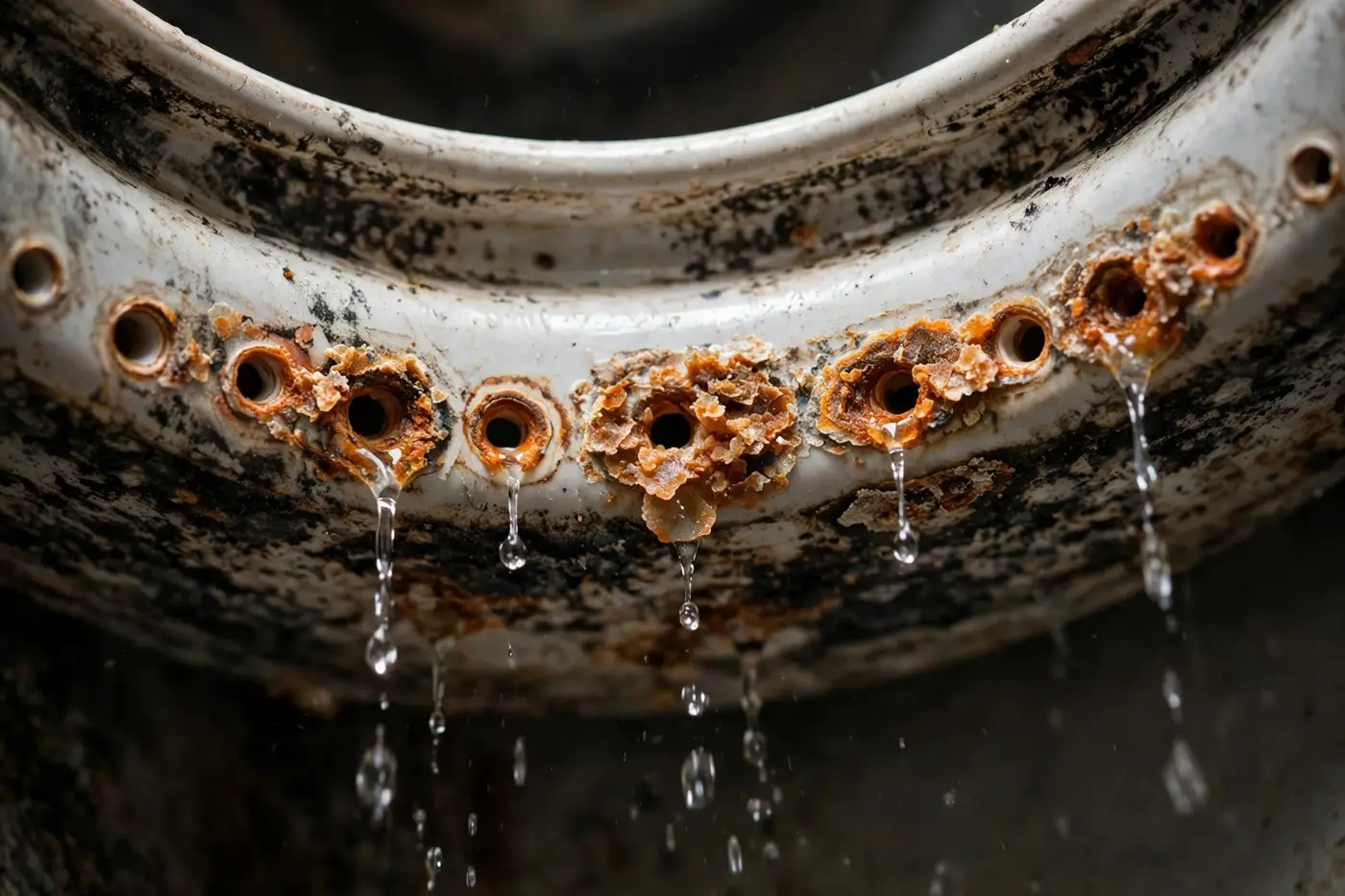
The rim jets are choked with mineral scale. Fountain Valley's hard water crusts the small angled holes under the rim over the years. During a flush the bowl wash looks merely lazy; during the refill, the reduced flow cannot bring the bowl up to its level before the fill valve shuts off. The jets can sometimes be cleared with patience and a small mirror and pick; on an older toilet with heavy scale, this is also a sign the whole fixture is living on borrowed time, as our hard water guide explains.
A partial clog is pulling the bowl down. A blockage forming in the trapway or just beyond it can siphon the bowl as the last of each flush drains away — the water keeps creeping after the flush should have settled. If low level arrives with slow drainage or new clogging, work the problem as a clog first.
Pattern two: the bowl drops slowly afterwards
A hairline crack in the trapway is the cause nobody wants and the pattern fits best: the bowl fills correctly, then loses water through a crack in the porcelain passage, down into the drain — no water on the floor, no visible damage, just a level that will not stay. Cracks like this follow age, a hard impact long ago, or a toilet that has been rocking on its flange and stressing the porcelain. There is no repair for a cracked trapway; the toilet is replaced. The pencil-mark test below confirms it before anyone spends anything.
A vent problem lets pressure changes in the drainage system pull at the trap. When a nearby fixture drains — a tub emptying, a washing machine pumping out — a poorly vented line can siphon water out of the toilet trap, leaving the bowl low and sometimes gurgling. This pattern repeats with other water use and often affects the fixtures on one vent stack together.
Evaporation is the innocent cause, and worth ruling out before the others: a guest bathroom that goes unused for weeks in a dry, warm house loses bowl water to the air, slowly and harmlessly. The level drops evenly, there are no smells until the seal gets very low, and one flush restores everything. If the "problem bathroom" is the one nobody uses, this is probably your answer.
Three checks that separate the causes
- The pencil test. Mark the bowl's level, leave the toilet unused, and check at one hour and at eight. No drop: the problem is in the refill (pattern one). A steady drop: the bowl is losing water (pattern two).
- The bucket test. Pour water slowly into the bowl until it reaches the level you remember as normal. If it holds there, the trapway is sound and the refill path is at fault. If it sinks back down over the next hour, the trapway, vent or a siphon effect is draining it.
- The lid-off look. With the tank lid off, flush and watch the refill: water should stream from the refill tube into the overflow pipe for the whole refill. No stream, a stream that stops early, or a tube lying loose in the tank each tells its own story — and each is a small fix.
Adjustments that mask the symptom (and why to avoid them)
The tempting fix is to raise the tank's water level so the refill runs longer and forces the bowl up. It works for a week and costs you twice: every flush now uses more water than the toilet was designed for, and the underlying cause — a crack still growing, jets still crusting — keeps developing unseen. The same goes for bending floats and wedging refill tubes. A low bowl is a message about a specific part; turning a different part up louder does not answer it. Set levels to the marks the manufacturer cast into the tank, and let the pattern point at the real cause.
When it stops being a home check
Call when the bucket test shows the bowl cannot hold water (that is crack or vent territory, and neither is a tank part), when low level arrives with sewer smells that flushing does not clear — our sewer smell guide explains why the two travel together — or when two bathrooms on the same stack are misbehaving at once. These are all single-visit diagnoses for a specialist with the toilet in front of them, and the pencil marks and timing notes you have made will shorten the visit. During open hours, one call to (714) 410-0362 connects you with a local toilet specialist.
What happens on a visit for a low bowl
The visit follows the same fork your own checks mapped. The refill path is inspected first, with the tank lid off: tube position and condition, the stream into the overflow pipe during a flush, the rim jets from below with a mirror. If the refill is healthy, attention moves to the trapway — a bowl that cannot hold the water a bucket gives it is losing that water somewhere, and the pattern of the loss separates a siphoning vent problem from a cracked passage. Vent questions are settled by what the other fixtures on the same stack are doing, which is why you will be asked about the second bathroom.
The outcomes are usually one of three: a small part and a setting (tube, float, a jet clearing), a vent investigation that extends beyond the toilet itself, or the honest news that the trapway is cracked and the toilet should be replaced. None of the three is guessable from the symptom alone, which is exactly why the pencil marks and the bucket result matter — bring them, and the visit starts halfway done.
Questions about low water in the toilet bowl
Is low water in the toilet bowl dangerous?
Not immediately, but it should not be ignored. The water standing in the bowl is the trap seal — the barrier that keeps sewer gas out of the bathroom. A bowl that sits very low, or empties further over time, weakens that barrier, which is why a dropping bowl level is often followed by sewer smells. It also makes every flush less effective, because a flush starting from a low bowl has less water working for it. The toilet is safe to use while you arrange a look; it is the trend, not the day, that matters.
Can low bowl water cause clogs?
Yes, indirectly. The bowl's standing water is part of the flush: when you flush, the tank's water joins it and the combined volume is what carries waste through the trapway. Start with a bowl that is an inch low and the flush is weaker from the first second — paper that should have cleared stays behind, and repeat partial flushes build toward a blockage. If a toilet with a low bowl has also started clogging, fix the level first; the clogging often stops with it.
Does a low bowl level mean the toilet is leaking?
Not in the way most people fear. Bowl water is lost downward through the trapway or not replaced properly at the refill — it is not leaking onto the floor or into the wall. A bowl that drops because of a hairline crack in the trapway sends the water into the drain, not into your home. Water on the floor around the base is a different symptom with different causes; if you have both, the floor water is the one to act on first.
Why is only one of my bathrooms affected?
Because most causes are local to that one toilet: its refill tube, its rim jets, its float setting, or a crack in its trapway. The exception is a vent problem, which can affect the fixtures sharing one vent stack — often two bathrooms back to back. If both bathrooms sharing a wall have odd bowl levels or gurgling, think vent; if it is one toilet only, think that toilet.
How much water should be in the toilet bowl?
There is no single measurement that fits all toilets, because the resting level is set by the shape of the trapway inside the porcelain — each model holds its water at its own height, and the bowl is full when water stops rising at the end of the refill cycle, not at some universal line. The practical test is change: a bowl that sits noticeably lower than it used to, or lower than its identical twin in the next bathroom, has a problem worth finding, whatever the tape measure says.